

Digital Building Directory Signs: The Modern Solution For Offices And Commercial Spaces
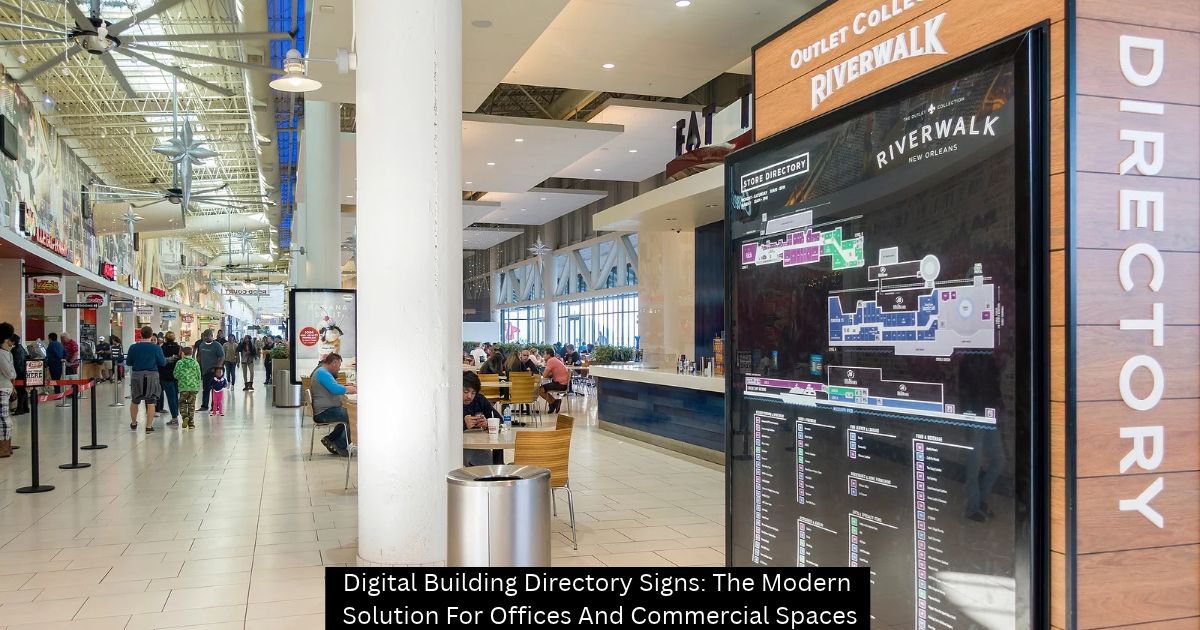
Static directory signs have been a fixture of office lobbies for decades, but they come with a built-in problem: every tenant change, suite move, or update means ordering a new sign panel. Digital building directory signs solve this by putting the same information on a screen that can be updated in minutes rather than weeks.
From Printed Panel To Live Screen
A digital directory replaces printed tenant listings with a screen-based display, typically placed near a building’s main entrance or elevator lobby. Visitors can see tenant names, suite numbers, and floor information at a glance, and in many cases, search or browse the directory interactively.
The Case For Switching
Updates happen instantly instead of waiting on a new physical panel to be fabricated and installed. While the upfront investment in a digital display is higher than a static sign, savings on repeated print and installation costs over time often make up the difference, especially in buildings with regular tenant turnover. Many systems also do more than list names, wayfinding maps, building announcements, or event listings can all live on the same screen, and the overall effect reads as a more modern, well-maintained property.
Not Every Building Needs One
Digital directory signage tends to deliver the strongest return in multi-tenant office buildings with regular leasing changes, medical office buildings where department listings shift periodically, and large commercial or mixed-use developments with dozens of businesses under one roof. For smaller, stable buildings with few tenants and infrequent changes, a well-designed static sign may still be the more practical choice.
Before You Commit
Screen size and placement relative to lobby lighting and viewing distance matter as much as the technology itself. Someone needs to be responsible for keeping the directory’s content current, and the system should integrate with existing wayfinding signage so it feels like part of a cohesive experience rather than a standalone gadget.
FAQ: Digital Directory Signs
Question: How Much Does A Digital Directory Sign Cost Compared To A Static One?
Answer: The upfront cost is higher, but ongoing update costs are typically much lower, which can even out the total cost over several years for buildings with frequent tenant changes.
Question: Who Updates The Content On A Digital Directory?
Answer: Most systems include software that property management or building staff can use to update listings themselves, without needing a technician.
Question: Can A Digital Directory Include Wayfinding Maps?
Answer: Yes, many systems support interactive maps alongside the tenant listing, which is especially useful in larger buildings.
Question: Is A Digital Directory Harder To Maintain Than A Printed Sign?
Answer: It requires occasional software updates and hardware checks, but avoids the recurring cost and lead time of reprinting panels for every change.
For buildings with regular tenant turnover, a digital directory pays for itself in convenience and reduced update costs, while giving visitors a more modern first impression the moment they walk in. Visual Harmony Signs & Graphics can help you weigh the options and design a system that fits your space.
Back