

Sign Fabrication In Evansville, IN: How Production Capacity Impacts Your Brand Visibility
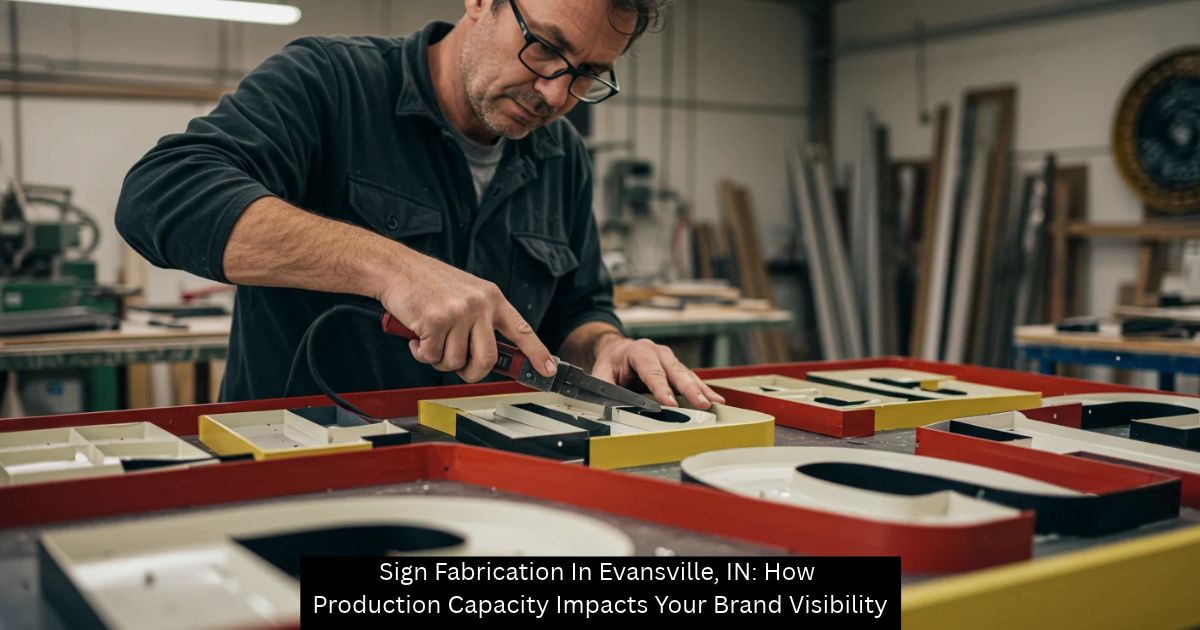
Good sign fabrication depends on more than the design itself. The production environment, equipment, materials, manufacturing processes, and quality-control procedures all influence how a finished sign looks and performs. For businesses considering sign fabrication in Evansville, working with a sign company that can access high-volume production resources can provide several practical advantages, including consistent quality, advanced manufacturing techniques, specialty materials, and efficient turnaround.
What Happens During Sign Fabrication?
Fabrication turns an approved sign design into a physical product. Depending on the project, production may involve cutting and forming aluminum or other materials, routing acrylic, producing dimensional elements, applying vinyl or printed graphics, assembling illuminated components, adding finishes, and preparing the sign for delivery and installation. Each stage requires accurate specifications and appropriate equipment.
Why Production Volume Can Support Consistent Quality
High-volume manufacturing facilities rely on repeatable production systems. When similar processes are performed regularly, measurements, cutting, finishing, assembly, and inspection can follow established procedures. That consistency helps businesses that need precise lettering, multiple sign components, illuminated elements, or a finished product that closely matches an approved design.
Quality Control Happens Throughout Production
Effective quality control is not limited to a final visual check. Production teams can review dimensions, material specifications, component placement, finishes, electrical elements, and other details at different stages. Catching issues earlier can prevent rework and keep the project moving toward installation.
Advanced Manufacturing Techniques Expand Design Options
High-volume production facilities often invest in specialized machinery and technology for cutting, routing, forming, printing, finishing, and assembly. These tools can produce detailed shapes, precise dimensional elements, consistent finishes, and more complex sign components. The advantage is access to manufacturing methods that fit the project’s requirements, rather than limiting the design to a small set of production capabilities.
Specialty Materials Can Make A Difference
Material selection affects both appearance and application. Depending on the sign, production may use aluminum, acrylic, vinyl, LED components, specialty finishes, or other materials chosen to meet the project’s requirements. A production partner with broad capabilities can give a sign company more options when balancing appearance, durability, construction, and budget.
Production Capacity Can Help With Turnaround
A high-volume production environment keeps projects moving through established workflows. Regular access to equipment, materials, production staff, and manufacturing processes can help reduce avoidable delays after a design has been approved. The exact turnaround still depends on the sign type, complexity, materials, production schedule, permitting, and installation requirements, but production capacity can be an important part of an efficient timeline.
Local Project Support Still Matters
Using a production partner does not remove the value of working with a local sign company. The local team can remain involved in design coordination, project communication, site requirements, permitting, scheduling, and installation while the production partner handles fabrication. This approach can combine local project management with the resources of a specialized manufacturing operation.
What To Ask Before Ordering Sign Fabrication
Ask where fabrication will take place, what production capabilities are available, which materials are recommended, and how quality control is handled. It is also useful to ask about the expected timeline from design approval through production and installation. These questions help clarify how the project will be managed and what production resources will support the finished sign.
FAQ: Sign Fabrication
Question: What Is High-Volume Sign Production?
Answer: It is a manufacturing environment designed to produce signage regularly using established workflows, specialized equipment, production staff, and quality-control procedures.
Question: Does Outsourced Fabrication Mean Lower Quality?
Answer: Not necessarily. The result depends on the production partner, materials, equipment, specifications, and quality-control process. An experienced high-volume production facility can provide substantial manufacturing resources.
Question: What Materials Can Be Used For Outdoor Signs?
Answer: Options include aluminum, acrylic, UV-stable vinyl, LED components, and other materials selected based on the sign’s design, location, and environmental exposure.
Question: Can Production Capacity Improve Turnaround Time?
Answer: It can help. Established workflows, equipment, material availability, and manufacturing capacity can help approved projects move through production efficiently. Timelines still vary by project complexity and requirements.
Sign fabrication is not only about how a sign looks in a finished photo. Production methods, quality control, manufacturing technology, material choices, and available capacity all contribute to the finished product. Visual Harmony Signs & Graphics works with production resources that can support these needs while keeping the project coordinated locally. Contact us to discuss your sign fabrication requirements and the production options available for your project.
Back