

Wayfinding Signs In Evansville: How To Help Visitors Navigate Your Space
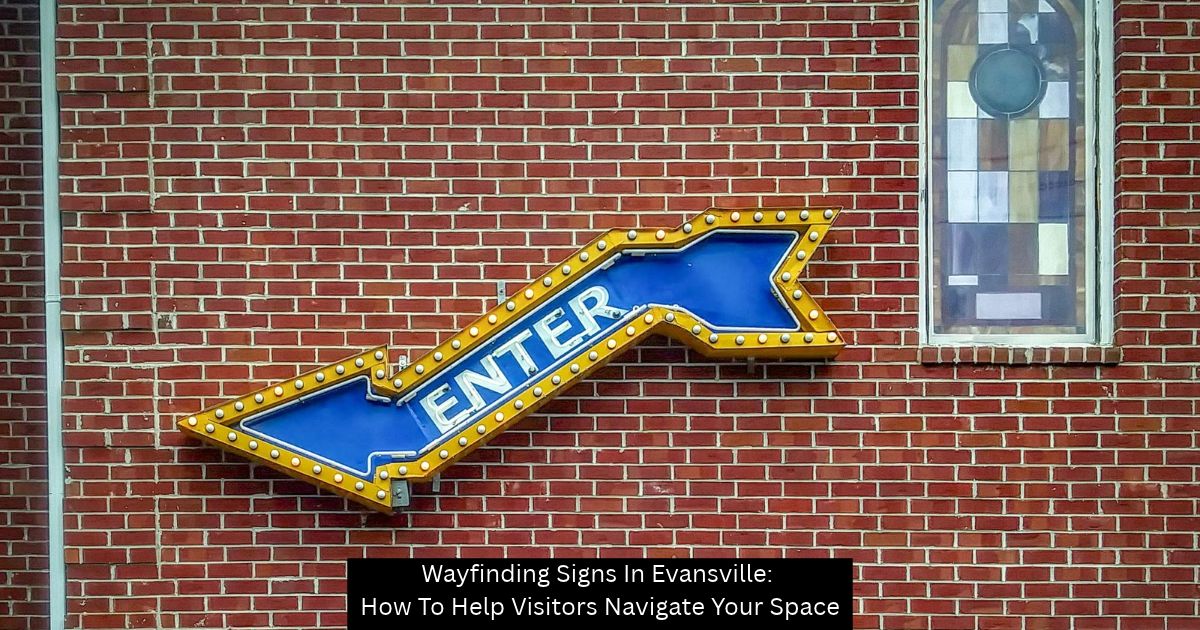
A confused visitor is rarely a happy one. Whether it’s a patient trying to find the right department in a medical building, a customer looking for a specific suite in an office park, or a guest navigating a large event venue, poor navigation creates frustration before the actual visit has even begun. Wayfinding signage solves this quietly and consistently, without anyone needing to ask for directions.
What Wayfinding Actually Does
Wayfinding is the system of signs, symbols, and visual cues that guide people through a physical space, covering everything from directional signs in a parking lot to room-number placards inside a building. Done well, it’s almost invisible, visitors simply move through the space with confidence, without realizing how much design work went into making that possible.
Spaces That Depend On It Most
Medical and professional office buildings need patients and clients to find specific suites quickly, especially when appointments are time-sensitive. Multi-tenant business parks funnel dozens of destinations through a single entrance. Campuses, large facilities, and event venues all share the same underlying challenge: reducing the mental effort required for someone to get where they’re going.
The Building Blocks Of A Wayfinding System
An effective system typically layers together exterior directional signs guiding traffic from the road to the right entrance, a building directory near main entrances, interior directional signage at key decision points like hallway intersections, and room or suite identification signs, often with ADA-compliant tactile lettering and braille where required. Consistent colors, icons, and typography across all of it make signs instantly recognizable as part of the same system.
Map The Space Before You Sign It
The most effective wayfinding systems are planned holistically rather than sign-by-sign. Mapping the actual paths people take through a space, and the decision points where they’re most likely to hesitate, leads to a system that solves real navigation problems instead of just adding signage for its own sake.
FAQ: Wayfinding Signage
Question: What’s The Difference Between Wayfinding And General Signage?
Answer: General signage identifies a place or business, while wayfinding specifically guides people through a sequence of decisions to reach a destination.
Question: Does Every Building Need A Full Wayfinding System?
Answer: Not necessarily, smaller or single-tenant buildings may only need basic directional and room signage, while larger or multi-tenant spaces benefit from a more comprehensive system.
Question: Is Wayfinding Signage Required By Law?
Answer: Certain elements, like ADA-compliant room identification, are legally required in many settings. Broader wayfinding beyond that is a design choice, not a legal mandate.
Question: How Often Does Wayfinding Signage Need To Be Updated?
Answer: Well-planned systems with modular components can be updated as tenants or departments change without redesigning the whole system.
Good wayfinding is felt more than it’s noticed; visitors simply arrive at the right place without frustration. For Evansville buildings with multiple tenants or complex layouts, a well-planned system pays off in fewer confused calls to the front desk and a more professional overall impression. Need custom Wayfinding Signs for your business? Visual Harmony Signs & Graphics designs and installs signage solutions that improve navigation, enhance the visitor experience, and reflect your brand. Contact us today for a free consultation and quote.
Back